
Reading Wittgenstein 1975-
By Mike Garofalo
Wittgentstein, Ludwig (1889-1951) Wikipedia
The Big Typescript: TS213. By Ludwig Wittgenstein. Edited and
translated by C. Grant Luckhardt and Maximilian E. Aue.
A German-English
bilingual Scholar's Edition. Wiley Blackwell,
2013, 2005, Brief German and English indexes. 1,031 pages:
526 in German and 516 in English. VSCPL, 2026.
This books looks promising to me for reading in 2026.
[I own the paperback book. It is a huge, heavy, unweildy,
and a sure to fall apart paperback book with any steady use.
The text is very small, and the mixed typefonts require some
getting used to. Contains detailed footnotes and endnotes
for scholars. No bibliography.]
VSCPL = Valley Spirit Center Poetry Library, my home library,
books that I own, my used book collection.
FVRL = Fort Vancouver Regional Library, Clark County, WA
The Blue and Brown Books. Preliminary Studies for the 'Philosophical
Investigations. By Ludwig Wittgenstein. Harper Torchbooks, 1958,
1965, 185 pages. VSCPL, 1978.
Culture and Value. By Ludwig Wittgenstein. Translated by Peter
Winch. University of Chicago Press, 1980, index, 94 pages. VSCPL,
2013.
How to Read Wittgenstein. By Ray Monk. Norton, index, 114 pages,
bibliography, chronology,
2005. VSCPL, 2026.
Lectures and Conversations on Aesthetics, Psychology,
and Religious Belief. By Ludwig Wittgenstein. Edited by Cyril
Barrett, University of California, 1966, 72 pages. VSCPL, 2005.
Ludwig Wittgenstein: Philosophy in the Age of Airplances.
By Anthony Gottlieb. Yale University, 2025, index, 209 pages.
VSCPL, 2025.
Ludwig Wittgenstein: The Duty of Genius. By Ray Monk.
Penguin, 1991, 704 pages. VSCPL, 2013.
On Certainty. By Ludwig Wittgenstein. Translated by G. E. M. Anscombe
(Editor, Translator), G. H. von Wright (Editor), and Denis Paul (Translator).
Harper and Row, 1972, 192 pages. A Dual-language (English and German)
publication.
Philosophical Grammar. By Ludwig Wittgenstein. Edited by
Rush Rhees. Translated by Anthony Kenny. University of
California, 1978, Blackwell 1974, 493 pages. VSCPL, 2026.
No index, bibliography, notes or introduction.
"In 1933 Ludwig
Wittgenstein revised a manuscript he had
compiled from his 1930-1932 notebooks, but the work as
a whole was not published until 1969, as Philosophische
Grammatik. This first English translation clearly reveals
the central place Philosophical Grammar occupies in
Wittgenstein's thought and provides
a
linkfrom his
earlier philosophy to his later views."
Philosophical Investigations
Philosophical Investigations. By Ludwig Wittgenstein. Translated
by G.E.M. Anscombe. Third Edition. Macmillan, 1958, 1968, index,
250 pages, English only text. VSCPL, 1975.
This was one textbook of mine for a graduate philosophy
seminar at California State
University at Los Angeles in 1975.
I relished our seminar discussions, lectures, remarks, and
studies. It was a great contrast with my intellectural crowd
at our
Biloxi Air Force days from 1969-1973.
I purchased a used hardback Third Edition, in mint condtion, in 2023,
a collector's copy, for $115.00. Sufficient evidence to consider
me a devotee of
Wittgenstein's methods, insights, and themes;
and my personal intellectual history since 1975. This was the
most expensive book that I have ever purchased. And, I spent
$150.00 on a Hohner Thunderbird Low C Diatonic Harmonica ...
yes, in 2023, money could buy you a little bit of a joyful,
and stimulating life full of fond memories.
Philosophical Investigations. By Ludwig Wittgenstein. Translated
by G.E.M. Anscombe, P. M. S. Hacker and Joachim Schulte. Edited
by P. M. S. Hacker and Joachim Schulte. Fourth Edition. Wiley
Blackwell, 2009, index, 592 pages. German and English Bilingual
text book. VSCPL, Hardbound, $38.00, in 2026.
An Analytical Commentary on Wittgenstein's Philosophical Investigations.
By
G. P. Baker and P. M. S. Hacker. Wiley-Blackwell, 1991, index, 352 pages.
A Companion to Wittgenstein's "Philosophical Investigations." By Garth Hallett.
Elucidating the Investigations. By Marie McGinn.
Reading Wittgenstein's Philosophical Investigations: A Beginner's Guide.
By John J. Ross
Wittgenstein and Social Epistemology. By Annalisa Coliva.
Wittgenstein: A Very Short Introduction. By A. C. Grayling.
Wittgenstein: An Introduction to the Investigations. By Joachim Schulte.
Wittgenstein's Art of Investigation. By Beth Savickey.
Wittgenstein's Philosophical Investigations: An Introcuction. By David G. Stern.
Wittgenstein's Philosophical Investigations: A Critical Guide. Edited by Arif Ahmed.
Philosophical Occasions: 1912 - 1951. By Ludwig Wittgenstein.
Edited by James Carl Klagge and Alfred Nordmann. Hackett, 1993,
542 pages, index. VSCPL, 2023."An essential resource for students of
Wittgenstein, this collection contains faithful, in some cases expanded
and corrected, versions of many important pieces never before
available in a single volume, including Notes for the 'Philosophical
Lecture', published here for the first time. Fifteen selections,
with bi-lingual versions of those originally written in German,
span the development of Wittgenstein's thought, his range
of interests, and his methods of philosophical investigation.
Short introductions, an index, and an updated version of
Georg Henrik von Wright's The Wittgenstein Papers situate
the selections within the broader context of the Wittgenstein
corpus and the history of its publication."
The Poetry of Thought: From Hellenism to Celan. By George Steiner.
New Directions, 2011, no index, 221 pages. VSCPL, 2026.
Simply Wittgenstein. by James Klagge. Simply Charly, 2016.
Tractatus Logico-Philosophicus. By Ludwig Wittgenstein.
(1921) Translation by D. F. Pears and B.F. McGuinness.
London, Routledge, 1961, 166 pages, index. Uses a
numerical system for organizing his brief Remarks.
VSCPL, 1975.
Tractatus Logico-Philosophicus
Tractatus Logico-Philosophicus. By Ludwig Wittgenstein.
Translated by Michael Beaney. Oxford World Classics,
2023, detailed introduction, notes on text, bibliography,
index, glossary, text in English only, 100 pages.
VSCPL, 2026.
An Introduction to Wittgenstein's Tractatus. By G. E. M.
Anscombe. Professor of Philosophy at the University of
Cambridge. Hutchinson University Library, 1959, 1971,
index, 179 pages. VSCPL, 1995.
Wittgenstein. By Anthony Kenny. Harvard University,
1973, 240 pages, index. VSCPL, 1982.
Wittgenstein's Artillery: Philosophy as Poetry. By James
C. Klagge. The MIT Press, Cambridge, MA., 2021, 258
pages, index, bibliography, notes. VSCPL, 2025.
Wittgenstein's Ladder: Poetic Language and the Strangeness of the
Ordinary. By Marjorie Perloff. University of Chicago, 1999, 305 pages.
"Marjorie Perloff, among our foremost critics of twentieth-century poetry,
argues that Ludwig Wittgenstein provided writers with a radical new aesthetic,
a key to recognizing the inescapable strangeness of ordinary language.
Taking seriously Wittgenstein's remark that "philosophy ought really to be
written only as a form of poetry," Perloff begins by discussing Wittgenstein
the "poet." What we learn is that the poetics of everyday life is
anything but banal." VSCPL, eBook, 2026.
Wittgenstein's Place in Twentieth-Century Analytic
Philosophy. By P.M.S. Hacker. Blackwell, 1966.
Zettel. By Ludwig Wittgenstein. Edited by G.E.M. Anscombe
and G.H. von Wright. Translated by G.E.M. Anscombe. Most
of the numbered entries in Zettel were written from 1945-1949.
Peter Geach went through boxes of typewritten clippings and
handwritten notes that Wittgenstein had roughly organized,
and prepared the quotes for Anscombe and Wright to edited
and translate as needed. This is a dual-language scholarly
book, German-English. No commentary, index, bibliography,
or notes.
University of California Press, 1967, 1970, 124 pages.
VSCPL, 1988.
Other Books and Links to Related Informatio
Philosophy of Language, Semantics
The Concept of Mind. By Gilbert Ryle. Must Have Books, 1949,
2023, 318 pages. VSCPL.
How to Do Things with Words. By John Langshaw Austin and
Edited by J. O. Urmson and Marina Sibisa. 1975.
The Language Instinct. By Steven Pinker. 2010. VSCPL.
Language and Time by Quentin Smith, 2002-
Language in Thought and Action. By S. I. Hayakawa. 1939. VSCPL.
Language, Truth and Logic. A. J. Ayer. 1936. VSCPL.
Logcal Positivism. By A. J. Ayer. 1966. VSCPL.
The Meaning of Meaning. By I. A. Richards and C. K. Ogden.
1923, 1989, 396 pages. VSCPL, 2003.
Philosophy of Language: A Contemporary Introduction.
By William G. Lycan. Third Edition, 2018.
Oxford Handbook on the History of Analytic Philosophy.
By Michael Beaney.
Riddles of the Sphinx. By F. C. S. Schiller. 1891.
When Words are Called For: A Defense of Ordinary Language
Philosophy. By Avner Baz. 2012.
Why We Need Ordinary Language Philosophy.
By Sandra Laugier. Translated by Daniela Ginsburg, 2013.
Wittgenstein
By Hans Sluga
Jan Zwicky, Ph.D. Candaian Philosopher/Poet/Musician (1956-)
Lyric Philosophy. By Jan Zwicky. Brush Education, 2014, 864 pages. Hardbound $51.00. VSCPL.
Wisdom and Metaphor. By Jan Zwicky. Brush Education, 2014, 304 pages. Hardbound $42.00.
The Experience of Meaning. By Jan Zwicky. McGill-Queens University Press, 2019, 248 pages. Paperback,$35.00.
Wittgenstein Elegies. By Jan Zwicky. Brick Books, 1986, 72 pages. Paperback $43.00.
Logic and Language
Language and Time. By Quentin Smith. Oxford University Press, 1993, 262 pages. VSCPL.
A defense of the tensed theory of time.
The Languages of Logic: An Introduction to Formal Logic. By Samuel Guttenplan.
448 pages, 1997.
2nd Edition. VSCPL, 2025.
Logic: Techniques of Formal Reasoning. By Donald Kalish, Richard Montague,
and Gary Mar. 2nd Editon. Oxford University Press, 1980, index, 520 pages.
VSCPL, 2000.
Logic: Techniques of Formal Reasoning. By Donald Kalish, Richard Montague,
and Gary Mar. 1st Editon. Hrcourt-Brace, 1964, index, 350 pages. VSCPL, 1964.
[I studied and used this logic text book in my classes at California State
University at Los Angeles from 1963-1967 as an undergraduate, and from
1975-1980 in graduate philosophy
studies. I was employed part-time for
6 years as a Logic Class Reader for
Professor Glathe and Professor Benson.
I corrected and graded student logic
homework and symbolic logic proofs.]
Logcal Positivism. By A. J. Ayer. 1966. VSCPL.
Modern Logic: A Text in Elementary Symbolic Logic. UK Edition. By Graeme Forbes.
Oxford University Press, 1994, 416 pages. VSCPL, 2025.
Philosophy of Logics. By Susan Haack. Cambridge University Press, 1978,
276 pages, index, bibliography, glossary. VSCPL, 2021.
Philosophy Rewired: Logic, Language and Learning Machines (AI and Philosophy).
By Anshuman Mishra. 2025.
The Problems of Philosophy: An Introduction to Analytic Philosophy.
By Bertrand Russell and Dennis Logan. 1912.
Statistics. By David Freedman, Robert Pisani, and Roger Purves. Norton, 4th Edition,
2000, 576 pages. VSCPL.
Ordinary Language Philosophy (OLP)
The Concept of Mind. By Gilbert Ryle. Must Have Books, 1949,
2023, 318 pages. VSCPL.
Language in Thought and Action. By S. I. Hayakawa. 1939. VSCPL.
The Meaning of Meaning. By I. A. Richards and C. K. Ogden.
Metaphysics in Ordinary Language. By Stanley Rosen. 1999.
Ordinary Language Philosophy - Wikipedia
Ordinary Language Philosophy - Internet Encyclopedia of Philosophy
Ordinary Language. Edited by V. C. Chappell. 1964.
Oxford Ordinary Language Philosophy: Wittgenstein and the Concept
of Mind: The Consumate Analysis. By Peter Dillard. 2015.
Philosophy and Ordinary Language: The Bent and Genius of Our Tongue.
By Oswald Hanfling. 2013.
Philosophy of Language: A Contemporary Introduction.
By William G. Lycan. Third Edition, 2018.
Poetry, Performativity, and Ordinary Language Philosophy.
By Philip Mills. 2025.
Revolution of the Ordinary: Literary Studies after Wittgenstein,
Austin, and Cavell. By Toril Moi. 2017.
When Words Are Called For: A Defense of Ordinary Language Philosophy.
By Avner Baz.
2012.
Wittgenstein's Artillery: Philosophy as Poetry.
By James
C. Klagge. 2021.
Wittgenstein's Ladder: Poetic Language and the Strangeness of the
Ordinary. By Marjorie Perloff. 1999.
Why We Need Ordinary Language Philosophy.
By Sandra Laugier. Translated by Daniela Ginsburg, 2013.
Words and Things. By Gellner. 1959. [Anti-OLP]
"In the twentieth century OLP was primarily associated with the later work of Ludwig Wittgenstein, early to mid-century philosophers at the University of Cambridge such as G. E. Moore and John Wisdom, and mid-century philosophers at the University of Oxford, including Gilbert Ryle, J. L. Austin, P. F. Strawson, H. L. A. Hart, and Paul Grice. Because a number of its most prominent practitioners taught at Oxford, OLP is sometimes informally referred to as "Oxford philosophy".
The approach peaked in influence during the 1940s–1960s and then rapidly declined as more formal and scientific styles of analytic philosophy gained prominence. Since the late twentieth century, however, ordinary-language-inspired work has played a significant role in post-analytic philosophy, especially in the writings of Stanley Cavell, John Searle, and a number of feminist philosophers and literary theorists who have adapted ordinary language methods for social, ethical, and aesthetic questions. Recent work in the history of analytic philosophy and in experimental philosophy has also re-examined and in some cases revived aspects of the ordinary language tradition.
A central theme, especially in the later Wittgenstein, is that the meaning of an expression is inseparable from its use in the language-games in which it figures. Rather than looking for meanings as abstract entities or inner mental items, OLP investigates the roles expressions play in concrete activities such as giving orders, making jokes, issuing apologies, or reporting observations.
On this view, philosophers often generate puzzles by abstracting words such as "know", "understand", "believe", or "object" from the ordinary circumstances in which they are learned and employed, and then treating the resulting abstractions as if they named special objects or metaphysical entities. When the ordinary uses of those words are carefully described, the temptation to posit such entities can diminish or disappear."
Ordinary Language Philosophy - Wikipedia
Quintain Poems by Mike Garofalo related to Wittgenstein's Remarks and Themes
#154, 155, 160, 233, 544, 846, 854, 1294, 1665, 1714, 2178
#
2427, 2501, 2614, 2643, 2645, 2654, 2675,
2687, 2688, 2723, 2730
#
2733, 2735, 2760, 2751, 2757, 2788, 2793,
2796, 2800, 2806
# 2808, 2854, 2850, 2855, 2859, 2863, 2864, 2876, 2920, 2928, 2935,
#
2960, 2983, 2989, 3043, 3057
Index to Bundled Up Quintains Related to Time:
# 2504, 2505, 2509, 2513, 2516, 2522, 2547, 2583,
#
2590, 2597, 2617, 2622, 2623, 2643, 2648, 2649
# 2652, 2663,2685, 2727, 2728, 2733, 2739, 2757
#
2767, 2768, 2769, 2831, 2858, 2864, 2866, 2872, 2890, 2891
#
2892, 2924, 2932, 2962, 2974, 2988, 2995, 3000, 3007, 3012
# 3013, 3023, 3043, 3073,
3102, 3103, 3120, 3127, 3155, 3158
# 3233, 3269, 3316, 3323, 3338, 3431, 3438, 3452, 3481
The Tick-Tock Tractatus by Mike Garofalo
Reading Ludwig Wittgenstein 1975-
I purchased my first copy of Philosophical Investigations
in January of 1975.
Translated by G. E. M. Anscombe,
1953, 1968, the Third Edition.
Wittgenstein's Remarks are often
brief, numbered, questioning,
expounding,
challenging,
wandering,
thinking, suggesting, wondering, describing . . . . .
I also purchased my first copy of the Tractatus in 1975.
2688.
Wittgenstein's Supposedly
suppose somebody says
suppose one wanted to ask
people will say
you may answer
someone says to me
you may say
suppose it were asked
one might ask
it will be said
suppose he might say
subjuctive mood swings
no one would say
there is a tendency
when do we say
we are inclined to say
Look at it this way, Describe,
Compare it to this and not to that
More pictures, fewer muddles
Contrast with something similar
Change your point of view
Wittgenstein's Remarks
"I have written down all these thoughts as remarks,
short paragraphs,
sometimes in longer chains about the same subject,
sometimes jumping, in a sudden change,
from one area to another."
- Ludwig Wittgenstein, Philosophical Investigations, Preface
"A Man may make a Remark---
In itself ---
A quiet thing
That may furnish
The Fuse unto a Spark
In dormant nature--- lain ---
Let us deport --- with skill ---
Let us discourse --- with care ---
Powder exists in Charcoal ---
Before it exists in Fire."
- Emily Dickinson, ED#952
Emily Dickinson, 1860-1886, ED#952
Remarks in Wittgenstein's Style
i had
a habit of smoking
in my cold garage
in a well-lit corner
reading Wittgenstein's Remarks, entranced.
Were they remarks, analogies, descriptions?
Were they analogies, asides, staged discussions?
Were they intellectual artillery against an enemy?
Were they charms that attracted followers?
Were they Results, Propositions, Rules?
Where are the Places in his living cosmos ...
Like Norway, Vienna, Cambridge? No!
Dismantle, Reassemble, Restructure
Point out, Listen attentively, Touch things gently
Untangle yourself from Essences
Explore the Grammar of Consciousness
Unpeel the Onion Layers: [Smells so Fresh]
Just juggling gems of logical arguments with himself,
Drowning at times in the depths of Socratic despair,
Hanging on, Fighting through, a soldier of Duty to the Death,
Never publishing again after 1922, Hesitant! Doubtful.
Always entangled in a lingering linguistic mess.
Discovering his Remarks and compact essays,
On a variety of intriguing matters and themes,
Captivated a young graduate student like me,
In those past 1975 days and in decades beyond it seemed.
The compactness, the brevity, the focused attention,
The questioning then answering, the courage then the faltering,
The clarity opening up suddenly, then drowning in a Wordy Sea.
A bluntness, directness, authoritarianism, and macho manly veteran style.
Slipping away as his last days faded, and a few students took up his crusades.
His later style wandered in the nettles of philosophical poetry.
Anyone stung by the bees of stupidity, received no mercy from he.
But the studious and scholarly few in his Cambridge classes,
Like Gertrude Elizabeth Margaret Anscombe,
Helped us understand this German-English speaking thinker's mind.
But he thought himself that he failed miserably.
Gertrude Elizabeth Margaret Anscombe

25 Steps and Beyond: Collected Works
At the Edges of the West, Volume 1
Highway 101 and Hwy 1: Pacific Coast
Bundled Up: Quintains and Tanka Poetry
At the Edges of the West, Volume 2
Highway 99 and Interstate 5
Poetry Research by Mike Garofalo
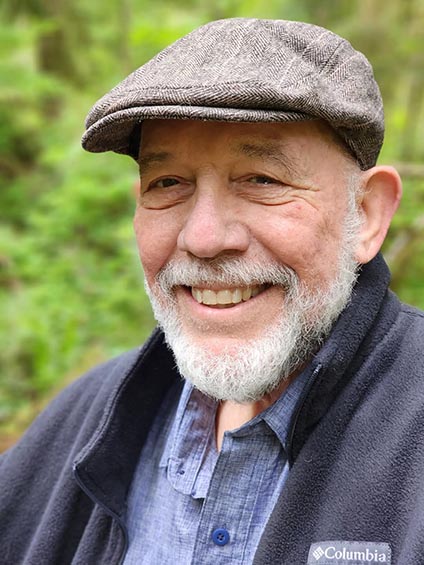
Mike Garofalo lives in Vancouver, Washington.
He worked for 50 years in city and county
public
libraries, and in elementary
schools.
He graduated with
degrees in
philosophy,
library science, and education. He has been
a web publisher since 1998.
Quintains, Pentastichs, Tankas, Onions
25 Steps and Beyond: Collected Works
This document was last edited, revised,
reformatted, added to, relinked,
changed, improved, or modified
by Mike Garofalo
on February 23, 2026.